

Turn AI spend into a line item you can actually manage.
Attribute every model call to a team, budget, and cost center, with a hard monthly limit and an alert before it that stop overruns before they reach the invoice. Make AI cost something you see coming, not something you reconcile.
AI cost shows up after it's spent.
A single provider bill lands each month with no breakdown and no ceiling, so finance discovers AI spend at reconciliation instead of governing it in real time.
One big provider invoice
A provider bill arrives with no split by team, product, or feature. You can't attribute or defend a number you can't break down.
No guardrails on spend
Nothing caps a runaway agent or a retry storm. Budgets are found at month-end reconciliation, not enforced when the spend happens.
Planning blind
Usage swings with every launch and prompt change. Nobody can say where the month will land until the invoice does.
AI is becoming a top budget line item.
Token volume climbs with each agent and feature shipped. AI is on track to surpass infrastructure costs as a standalone cost center.
A single deploy or retry loop can multiply spend overnight, with nothing in the path to catch it before the bill comes.
FinOps teams need full visibility into who is spending what, how budgets are tracking, and what the spend returns.
Attribution, budgets, alerts - built in.
Route every call through one plane that attributes spend to its owner, enforces budgets in real time, and routes each call by cost and quality.
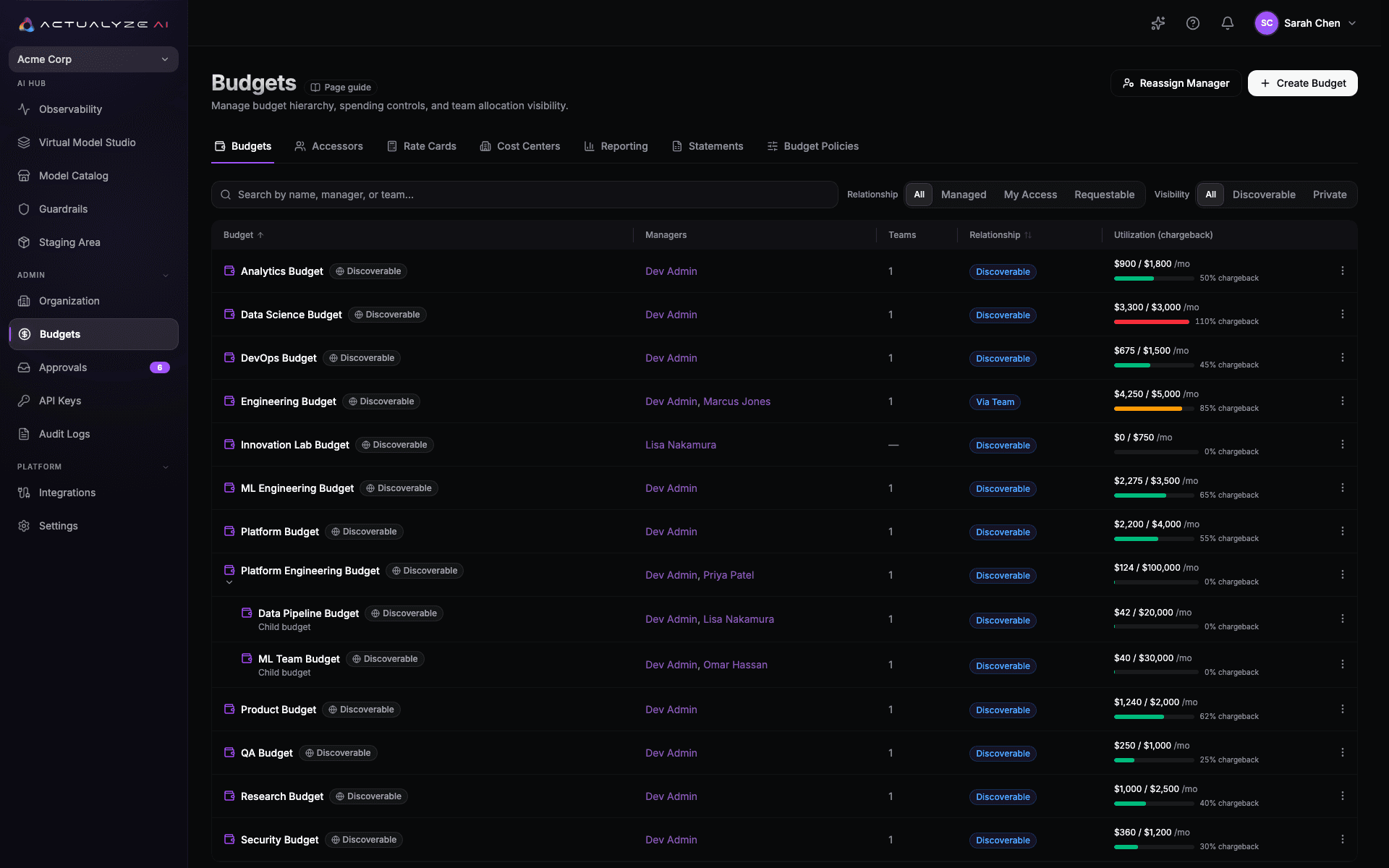
Every call attributed.
Spend is attributed to budget, team, and cost center as it happens and priced per route, with every estimate labeled and unknown cost never shown as $0. Charge it back at cost, with a recovery margin, or as a profit center, so the monthly number breaks down the way your cost model already does.
- Cost per budget, team, and cost center
- Pass-Through, Cost Recovery, or Profit Center chargeback
- Route-level rates, with a $0 cost basis on your own hardware
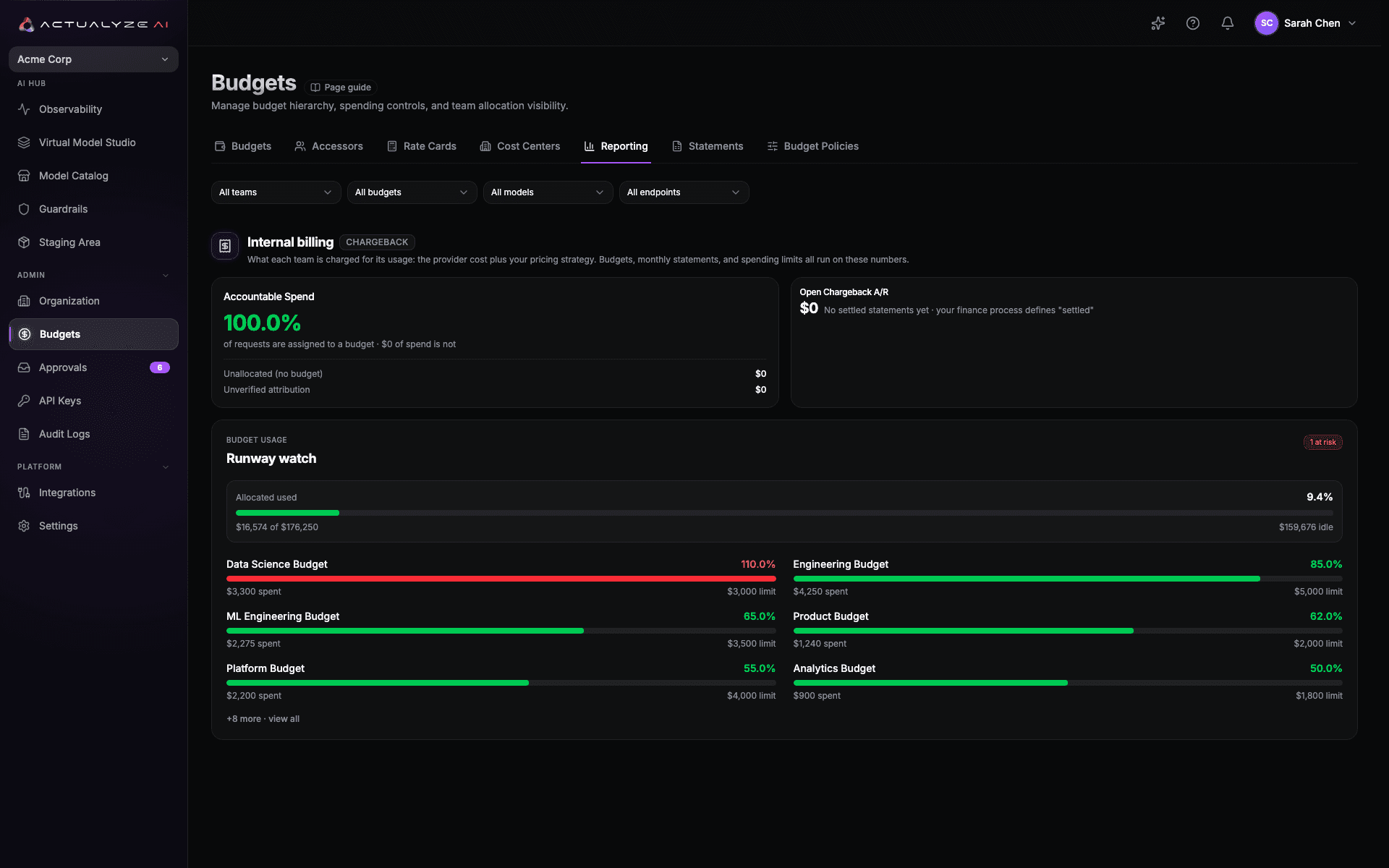
Budgets that enforce.
Set a hard monthly limit on any budget, with an alert before it, and Actualyze refuses the next call before an overrun hits. A workspace COGS ceiling holds total provider cost on confirmed rates, and you choose whether calls that can't be priced are served and flagged or refused.
- A hard monthly limit on any budget, with an alert before it
- Hard stop before overrun
- Workspace COGS ceiling on confirmed rates
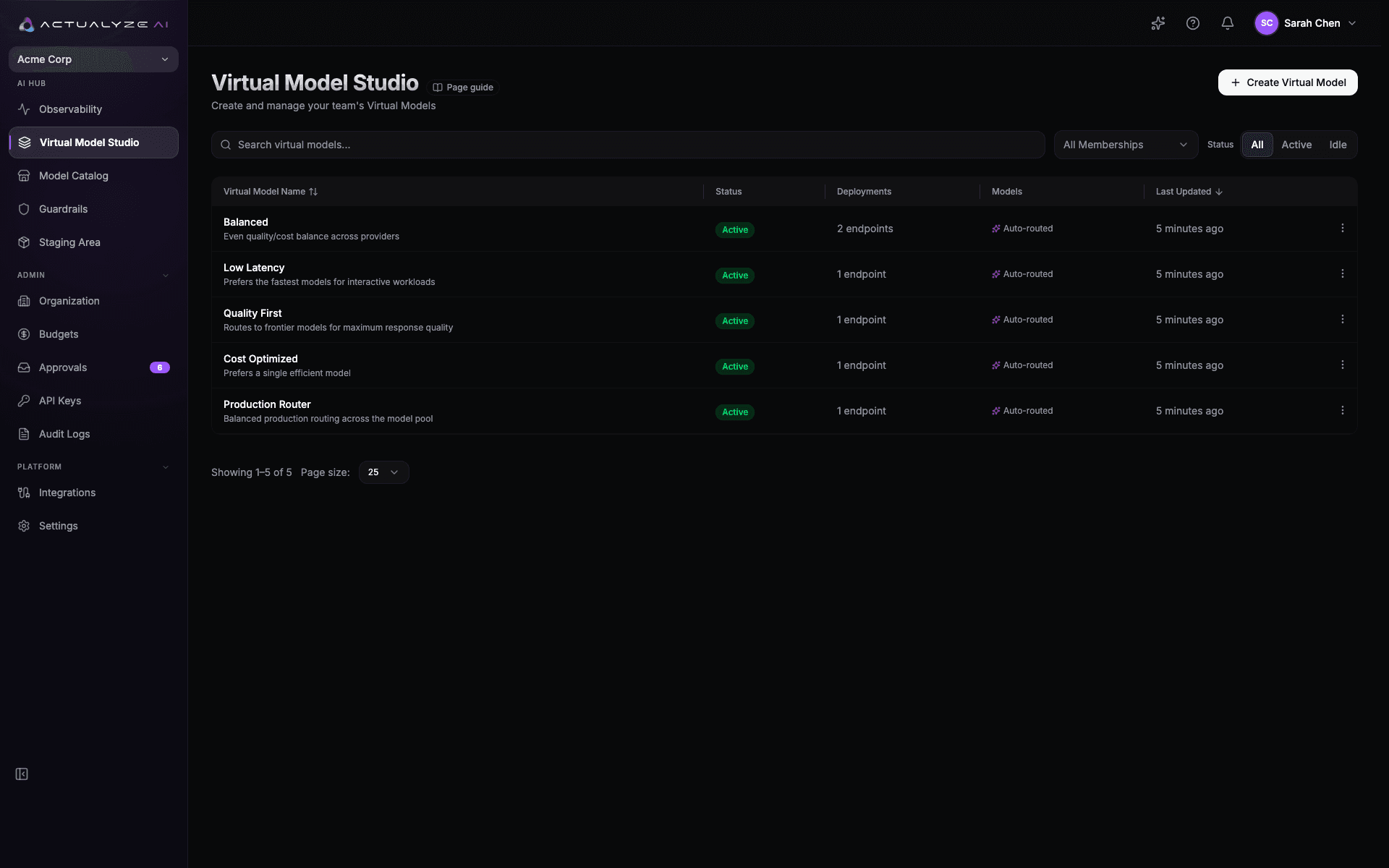
Routing that cuts the bill.
Virtual Models send each call to the cheapest model strong enough for the job, with failover built in. Month-to-date spend comes with a projected month-end, and each month closes on a statement priced at the rates in force when each call ran.
- Routing to the cheapest capable model, with failover
- Projected month-end spend on every budget
- Monthly statements: draft, reviewed, settled
One control plane does the cost work for you.
Each part of Actualyze turns AI spend into something attributed, limited, and settled on a monthly statement, so finance governs the number without policing every team by hand.
Questions from finance teams.
How granular is the cost attribution?
Can we actually cap spend, not just watch it?
How does routing reduce cost?
Will this give us numbers we can defend?
How do we charge AI spend back to teams?
Does it work across multiple providers?
How does this cut spend on shadow AI?
Make AI spend a number you control.
Attribute every call, enforce every budget, and see where the month will land before the invoice arrives.