

Ship AI fast without becoming the bottleneck.
Give every team a governed, self-serve path to models and agents, with access, cost, and guardrails handled by the platform. Enable AI instead of gatekeeping it.
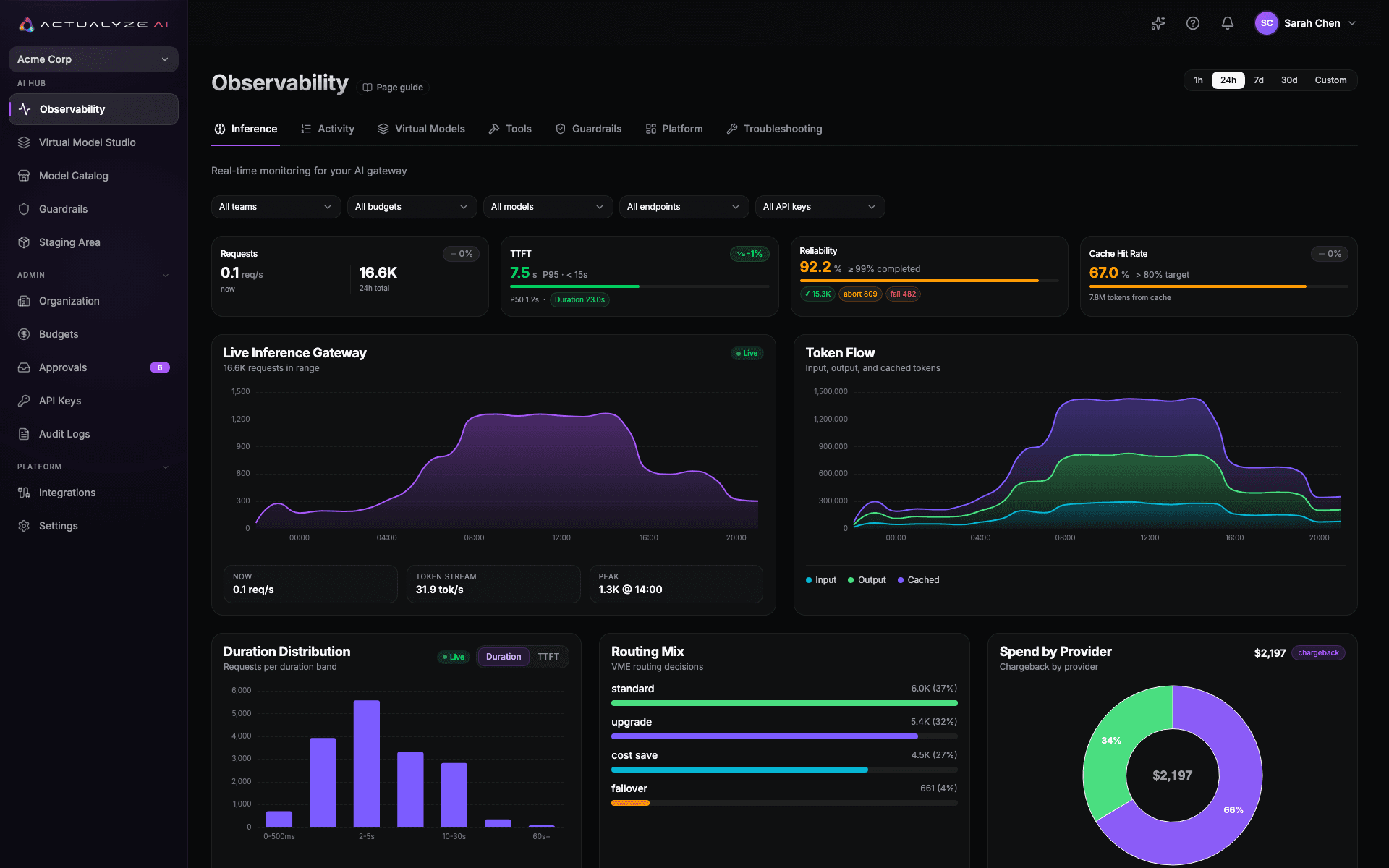
Every AI request becomes a ticket.
Teams want to build with AI faster than any central group can review models, keys, and integrations one at a time, so the platform team turns into a queue.
Approval queues
Teams wait on platform or security to vet each model, key, and integration. AI ships at the speed of the backlog.
Shadow stacks
Blocked teams wire up their own keys and tools. You inherit a sprawl you can't see, support, or secure.
Wasted cycles
Every team re-solves auth, routing, logging, and limits. Duplicated effort slows everyone down.
AI is now a platform concern, not a project.
Feature requests now come from every product, support, and ops group at once, not a single ML team you can serve by hand.
New providers and models land constantly. Hard-wiring any one of them into apps ages badly and slows the next switch.
When usage is ungoverned, the cost, security, and compliance exposure lands on the platform team regardless of who shipped it.
A control plane your teams build on.
Put one governed path in front of every model, and let teams self-serve inside the guardrails you set, without re-platforming each one.
A governed self-service catalog
Curate a governed catalog of models and Virtual Models. Teams deploy in a click, or stage first when access or configuration needs validating: self-serve, inside the policy you define once.
- Vetted model catalog
- Deploy in a click, or stage and validate first
- Curated by Workspace Admins, one sanctioned path for every team
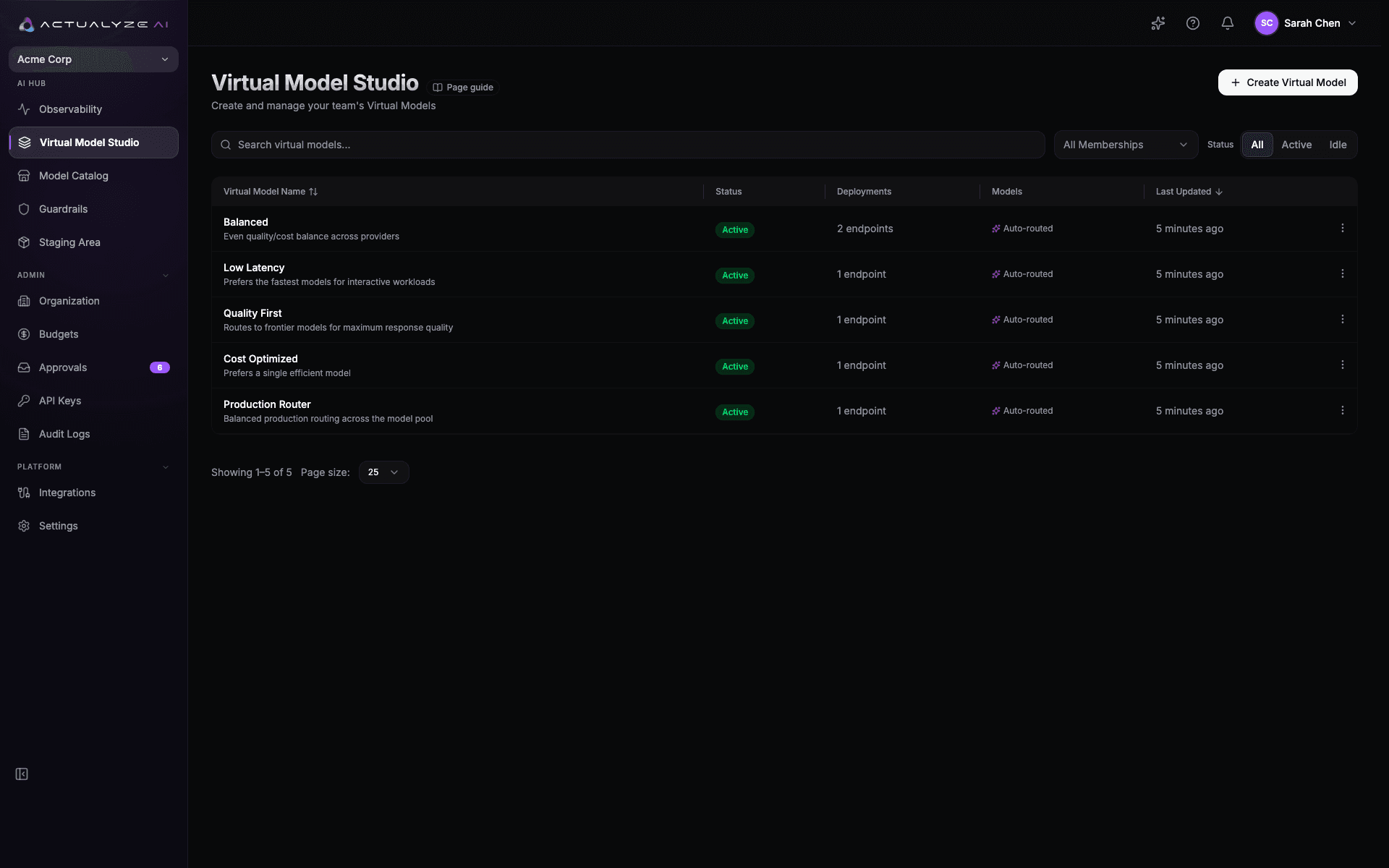
One URL, every model
Apps call a single endpoint and a Virtual Model. Actualyze routes across OpenAI, Anthropic, Azure OpenAI, and Bedrock, with failover and routing policy handled centrally: no per-provider rewiring.
- Single endpoint for every provider
- Swap providers behind a Virtual Model, no app changes
- Intelligent routing and failover built-in
Governance in the request path
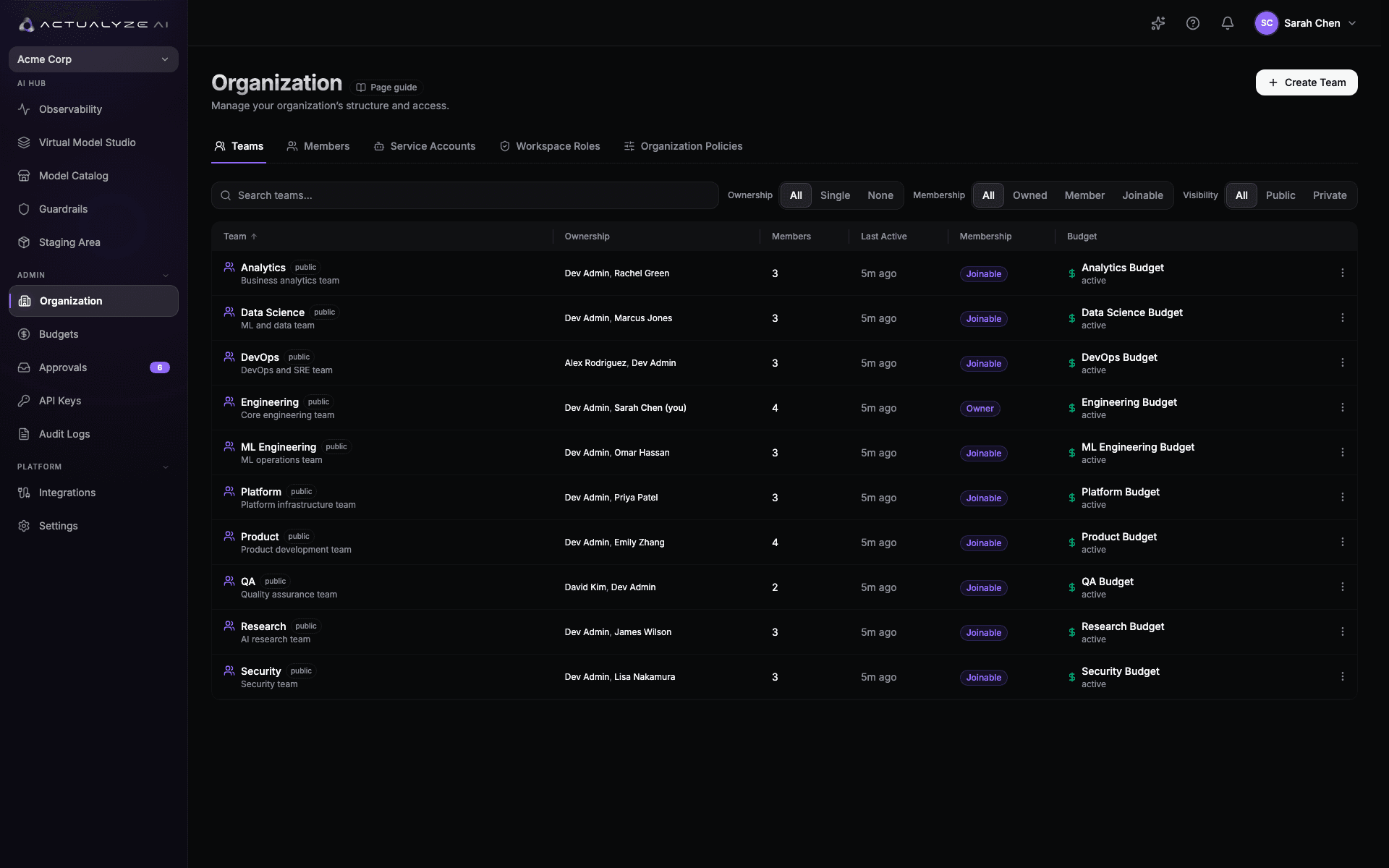
Teams onboard under policies you set — self-service team creation, default roles, and access mapped to your org through identity integration. From there, budgets and policy are enforced and logged on every call, so enabling a team doesn't mean trusting it unconditionally.
- Self-service team creation under approval policies you control
- Default roles and per-team access through your SSO identity provider (SAML)
- Budgets and policy enforced and logged on every request
One control plane does the platform work for you.
Each part of Actualyze removes a job you'd otherwise build and maintain yourself, so you enable AI without re-solving the infrastructure.
Questions from platform teams.
Do developers have to change how they call models?
How do teams get a new model without filing a ticket?
Doesn't self-serve mean losing control over security and cost?
Can we use our own identity provider and org structure?
What happens when we adopt a new provider or model later?
Where does this leave the AI gateway some teams already built?
Enable AI. Don't gatekeep it.
Stand up one governed control plane and let every team build on it, safely and without waiting on you.